A sterile barrier system that qualifies cleanly in initial testing but cannot be consistently manufactured or sealed through production creates risk that surfaces late: during a validation audit, a failed lot, or a field complaint.
Most of that risk is set during design. Decisions about materials, package configuration, seal geometry, and process parameters determine whether a packaging system can be validated with confidence and whether that validation will hold once production begins.
For engineers, packaging professionals, and quality teams working in regulated sterilization applications, understanding this relationship between design inputs and downstream validation outcomes is not optional. It is foundational.
Why Validation Requirements Should Inform Packaging Design
ISO 11607 establishes the international framework for packaging terminally sterilized medical devices. Part 1 defines requirements for materials, sterile barrier systems, and packaging systems. Part 2 defines validation requirements for forming, sealing, and assembly processes, structured around installation qualification (IQ), operational qualification (OQ), and performance qualification (PQ).
The FDA recognizes both parts as consensus standards, and the agency’s Quality Management System Regulation (21 CFR Part 820, revised in 2026 to incorporate ISO 13485:2016 by reference) reinforces process validation as a regulatory expectation.
These are not procedural formalities applied after a design is finalized. They define what the packaging must demonstrate: consistent sterile barrier integrity through sterilization, distribution, aging, and aseptic presentation at the point of use. A packaging design that cannot produce repeatable seal characteristics creates a validation problem before testing even begins.
What many teams underestimate is how much validation cost and timeline are determined by decisions made months earlier, at the design stage. Engineers who account for validation testing protocols while the design is still flexible can avoid costly redesigns. Those who treat validation as a downstream activity often discover that the design itself introduces variability no amount of process optimization can resolve.
Designing Around the Sterilization Method
Every sterilization method imposes a distinct combination of thermal, chemical, moisture, and mechanical stresses on packaging materials. Previous M&Q articles have examined how steam, dry heat, gamma irradiation, ethylene oxide, and vaporized hydrogen peroxide each affect material performance differently. From a design-for-validation perspective, the critical point is narrower: the packaging must be engineered for the specific sterilization process parameters it will encounter, not for sterilization as a category.
Steam autoclave applications illustrate this well. Packaging must tolerate saturated steam at 121°C to 135°C (250°F to 275°F), rapid pressure transitions during vacuum pulses, and direct moisture contact. These conditions place simultaneous thermal and mechanical stress on seal areas, film surfaces, and package geometry.
A material that softens at these temperatures may exhibit dimensional changes that alter seal width or peel characteristics between pre-sterilization and post-sterilization testing. If those changes are inconsistent from cycle to cycle, the validation data will reflect unacceptable variability.
Radiation sterilization introduces different concerns. Gamma and electron beam processes can alter polymer molecular weight through chain scission or crosslinking, depending on dose, polymer chemistry, and stabilization. These changes may affect elongation, tensile strength, and seal properties in ways that only become apparent during post-irradiation aging.
The design implication is the same regardless of method: the packaging must be configured so that sterilization-induced material changes remain within the validated performance range. Designing with minimal clearance between expected process conditions and material performance limits is one of the more common and more costly engineering missteps. Normal process variation needs room.
Seal Design and Process Repeatability
The seal is the most validation-sensitive element of a sterile barrier system. ISO 11607-2 requires that sealing processes be validated through IQ, OQ, and PQ to demonstrate reliable production of seals meeting defined acceptance criteria. ASTM F88 is commonly used to measure seal strength, while methods such as ASTM F2054 (burst testing) and ASTM F2096 (bubble leak testing) evaluate package integrity.
For validation to succeed, the seal must behave predictably. The combination of seal geometry, material, process parameters (temperature, pressure, dwell time), and equipment must produce consistent results across production runs, operators, and environmental conditions.
Designs that require narrow process windows to achieve acceptable seal strength are inherently fragile. They are harder to validate and more vulnerable to drift during production.
Material properties directly influence this repeatability. A film with consistent thermal response across its width and from lot to lot will produce more uniform seals than a material with variable crystallinity, thickness, or surface characteristics.
This is where material selection and supplier quality intersect with process validation: the same sealing equipment, running the same parameters, will produce different results if the incoming material varies beyond the range validated during OQ. The equipment does not compensate for material inconsistency.
Seal design also affects aseptic presentation, a requirement ISO 11607-1:2019 strengthened with explicit usability evaluation provisions. A seal must maintain sterile barrier integrity through sterilization, handling, and storage while still allowing the end user to open the package cleanly. The failure modes run in both directions:
- Over-engineered seals that tear the film on opening can deposit particulates or fragments into the sterile field.
- Under-engineered seals may fail before the package reaches the point of use.
Both outcomes represent validation and compliance failures.
Material Consistency and Its Effect on the Validated State
A validated packaging process is validated for a defined set of conditions, including the specific material used during qualification. ISO 11607-2 requires revalidation when changes occur to raw materials, equipment, or process parameters. In practical terms, material variability from the packaging supplier can undermine a validation that was established using material from a different production lot.
Batch-to-batch consistency in film thickness, mechanical properties, thermal behavior, and surface characteristics is not a convenience. It is a prerequisite for maintaining a validated state. If incoming material varies in ways that affect sealing, thermoforming, or barrier performance, the manufacturer faces a difficult choice: widen the validated process window (which may not be feasible without requalification) or accept the risk of out-of-spec production.
This makes supplier evaluation a validation concern, not just a procurement activity. The relevant questions go beyond price and lead time:
- Does the supplier control its own extrusion and formulation?
- What quality system governs production?
- Can the supplier provide lot-specific test data?
- How much variability exists between production runs?
A supplier that extrudes its own film, controls its own formulations, and manufactures under a documented quality system such as ISO 9001 provides a different level of traceability than one sourcing material from multiple external converters.
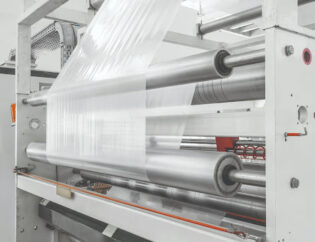
M&Q manufactures nylon sterilization packaging from extrusion through finished product at its facility in Schuylkill Haven, Pennsylvania. This vertically integrated approach gives M&Q direct control over resin selection, formulation, extrusion parameters, and converting processes, supporting the batch-to-batch consistency that validated packaging systems require.
Products are manufactured using FDA-compliant grade A resins, produced under controlled, low-particulate production conditions, and registered as FDA 510(k) Class II Medical Devices.
Package Integrity, Aging, and Distribution Testing
Validation does not end with seal testing after sterilization. ISO 11607-1 requires that the sterile barrier system maintain integrity through distribution, storage, and the intended shelf life. This involves distribution simulation (commonly performed per ASTM D4169 or ISTA protocols) and aging studies, both of which test the packaging under conditions the design phase should have anticipated.
ASTM F1980 provides the framework for accelerated aging of sterile barrier systems using elevated temperature exposure based on Arrhenius reaction kinetics. Accelerated aging data can support initial shelf-life claims, but the standard requires that results be confirmed through real-time aging.
A packaging design that passes initial post-sterilization testing but degrades during aging, whether through seal strength reduction, embrittlement, or dimensional change, has not met the validation requirement. It has only delayed the discovery of a design gap.
Engineers must consider long-term material behavior, not just acute sterilization performance. A nylon film with service temperatures well above the sterilization range offers inherent thermal margin, but aging evaluation should also account for changes in mechanical properties, barrier performance, and seal peel characteristics over time. Packaging geometry, storage orientation, and stacking loads all influence how real-world conditions interact with material properties during the shelf life.
Distribution testing addresses a different set of stresses: vibration, compression, drop impact, and atmospheric pressure changes during transit. The protective packaging layer (distinct from the sterile barrier system under ISO 11607) must prevent physical damage to the sterile barrier during these events. If the protective packaging design is inadequate, sterile barrier breaches may occur even when the barrier material itself is inherently durable. The root cause is a design-level oversight, not a material failure.
Change Control and the Cost of Disrupting a Validated System
One of the most underappreciated aspects of sterilization packaging design is what happens after validation. ISO 11607-2 requires documented change control procedures and identifies specific revalidation triggers:
- Changes to raw materials
- Equipment modifications or relocation
- Process parameter changes outside the validated range
- Sterilization cycle modifications
In practice, changing a packaging material, switching suppliers, modifying a seal configuration, or altering sterilization parameters can trigger partial or full revalidation. The cost and timeline implications are significant. A complete packaging validation involving IQ/OQ/PQ, distribution simulation, and accelerated aging can require months of testing.
This reality reinforces two engineering principles. First, packaging design decisions should account for long-term manufacturability and supply stability. Selecting a material and supplier capable of consistent performance over years of production reduces the likelihood of forced changes that trigger revalidation.
Second, every design change, however minor it appears, must be evaluated through the change control framework. A seemingly equivalent material from a different supplier is not validated until it has been tested and documented as such. Equivalence is an engineering conclusion, not an assumption.
Designing for Compliance Across the System
Regulatory compliance in sterilization packaging is not a characteristic of the material alone. It is a characteristic of the entire system: the material, the package design, the sealing process, the sterilization method, the handling and storage conditions, and the quality system that controls all of these elements. Treating any single component as the compliance checkpoint misses the point of ISO 11607.
Engineers and quality teams evaluating sterilization packaging should assess materials against the full scope of the standard and applicable regulatory requirements, including sterilization compatibility, seal process validation, aging and distribution performance, aseptic presentation, and documented traceability. Technical data from the material supplier (service temperature ranges, mechanical properties, barrier data, chemical resistance) supports this evaluation but does not replace application-specific validation.
For sterilization packaging applications involving steam, dry heat, or gamma radiation, M&Q’s engineering team can provide technical data, material samples, and support for your qualification process.