Sterilization packaging must do two things that seem contradictory. It must allow the sterilization process to reach the product inside, then prevent anything from reaching that product afterward. That dual requirement is what separates sterilization packaging from conventional protective packaging.
In medical, dental, and other controlled environments, the package is not a passive container. It is a functional component of the sterilization system, and when it underperforms, the consequences reach far beyond a damaged product.
Sterilization Packaging Is Part of the Sterilization System
A sterilization cycle does not end when the autoclave door opens. For a terminally sterilized medical device, the packaging must allow the sterilant (steam, dry heat, or radiation) to interact with the product, then serve as a microbial barrier from that point forward through handling, storage, transport, and aseptic presentation at the point of use.
ISO 11607 defines the sterile barrier system as the minimum packaging that prevents microbial ingress and maintains sterility of the device until it is used. The standard draws a clear line between the sterile barrier system itself and any protective packaging used to prevent damage to it. Both layers must be considered when evaluating packaging performance.
What this means in practice: the packaging must be compatible with the sterilization method, the product geometry, the sealing process, the handling environment, and the storage conditions. A material that survives the sterilization cycle but fails during transport has not met the requirement. Yet this is exactly where many packaging evaluations stop too early, focusing on cycle survivability without accounting for the full post-sterilization workflow.
What Sterilization Packaging Must Withstand
Steam autoclave sterilization, the most widely used method for reusable medical devices and instruments, exposes packaging to saturated steam at 121°C (250°F) to 135°C (275°F) under elevated pressure. Cycle parameters vary. Standard gravity displacement cycles operate at 121°C for 15 to 30 minutes. Pre-vacuum cycles run hotter and faster, typically at 132°C to 135°C for 3 to 4 minutes. In both cases, the packaging must tolerate rapid pressure changes, direct steam contact, and moisture exposure without deformation, rupture, or seal compromise.
Dry heat sterilization operates at even higher temperatures, though without the moisture component. Gamma irradiation introduces different stresses entirely, including potential polymer degradation from ionizing radiation exposure.
But the sterilization cycle is only part of the picture. After the cycle, packaging faces mechanical stresses during handling, stacking, and transport. Sharp instruments, device edges, and repeated contact with other packages create ongoing puncture and abrasion risks that can last weeks or months through storage.
Why Material Performance Matters Before, During, and After Sterilization
Sterilization packaging performance spans three distinct phases, each placing different demands on the material. Most failures trace back to a mismatch between what was validated and what actually happens in one of these phases.
Before Sterilization
Before the cycle begins, the packaging must be clean, free of particulates, and structurally intact. The material must be sealable using the facility’s validated sealing method and compatible with the product it contains. A film that sheds particles or releases extractables under pre-sterilization conditions introduces contamination risk before the cycle even starts.
For cleanroom and medical manufacturing environments, material cleanliness at the point of manufacture also matters. Films produced under controlled, low-particulate conditions reduce the contamination burden before sterilization packaging ever reaches the end user. This is a detail that is easy to overlook during supplier evaluation, but it directly affects incoming material quality.
During Sterilization
During the cycle, the packaging must tolerate the full range of sterilization conditions without failure. For steam autoclave applications, that means maintaining structural integrity through saturated steam at temperatures up to 275°F, pressure differentials, and rapid thermal transitions during exhaust and drying phases.
Materials that soften, warp, or become brittle under these conditions compromise the sterile barrier. Seal areas are particularly vulnerable. If the seal loses integrity during the cycle, the entire sterilization event is negated, regardless of whether the sterilant reached the product.
The packaging must also facilitate drying without trapping moisture that could support microbial growth. Residual moisture inside the package after sterilization is one of the more common and less visible failure modes.
After Sterilization
After the cycle, the packaging becomes the sole barrier between a sterile product and the surrounding environment. It must maintain that barrier through cooling, handling, storage, transport, and aseptic presentation at the point of use.
This post-sterilization phase is often the longest and least controlled. Packaging may be stacked, moved between carts, dropped, compressed, or subjected to temperature and humidity fluctuations. Materials that lose puncture resistance after thermal cycling, or seals that weaken over time, create latent risks that may not surface until the package is opened, when it is too late to intervene.
Key Material Properties in Sterilization Packaging
Seal Integrity
The seal is the most common point of failure in sterile barrier packaging, and the one most often underestimated during material selection. A seal must form consistently, remain stable through sterilization exposure, and resist peeling, channeling, or delamination during handling and storage. Too strong, and it tears the package on opening. Too weak, and it fails in storage.
Materials that maintain consistent seal properties across multiple autoclave cycles reduce the risk of sterility compromise and the need for reprocessing.
Puncture and Abrasion Resistance
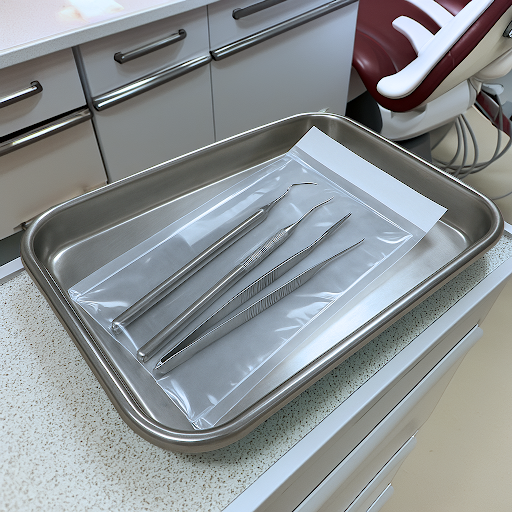
Medical and dental instruments often have sharp edges, pointed tips, or irregular geometries that can puncture or abrade packaging during handling, stacking, and transport. A single puncture creates a pathway for microbial ingress, potentially compromising the sterility of the entire package.
Nylon films offer inherent advantages in puncture and abrasion resistance compared to many alternative packaging materials. This is particularly relevant in dental sterilization packaging, where small, sharp instruments are packaged in individual pouches or tubes and handled repeatedly before use.
Barrier Properties
After sterilization, the packaging must prevent microbial, particulate, and moisture ingress for the duration of storage. Barrier performance depends on the material’s permeability characteristics, the seal integrity, and the overall package construction.
For terminally sterilized devices, the packaging must maintain its barrier properties under the storage conditions specified in the manufacturer’s validated shelf-life protocol. This is why accelerated aging testing, as outlined in ASTM F1980, is a critical part of packaging validation.
Temperature and Process Compatibility
Not every material is compatible with every sterilization method. A film that performs well in gamma irradiation may not withstand steam autoclave conditions. The reverse is also true. Selecting a material validated for the specific sterilization method, temperature range, and cycle parameters in use is a fundamental engineering decision, not a procurement shortcut.
For steam autoclave applications, materials must tolerate service temperatures of at least 250°F (121°C), with many applications requiring performance at 270°F to 275°F (132°C to 135°C). Nylon films engineered for sterilization applications can provide service temperatures well above these thresholds, offering a margin of safety for extended or non-standard cycles.
Clarity and Inspection
Transparent or semi-transparent packaging materials allow visual inspection of contents before and after sterilization. Clarity is not a barrier property, but it supports quality checks, product identification, and detection of obvious packaging failures such as moisture entrapment or visible breaches.
What Happens When Sterilization Packaging Fails
Packaging failure in a sterilization application triggers consequences that extend well beyond the individual package:
- Sterility compromise requiring reprocessing of instruments or rejection of packaged devices
- Delayed clinical procedures while instruments are re-sterilized
- Scrap, rework, and quality investigations that disrupt production schedules
- Regulatory scrutiny and corrective action requirements under FDA Quality System Regulations (21 CFR Part 820) and ISO 11607
The real issue is not that packaging failures happen. It is that they are almost always more expensive to resolve than to prevent. This is why sterilization packaging decisions should be treated as engineering decisions, not procurement transactions.
Engineering Considerations When Selecting Sterilization Packaging
Engineers and packaging specifiers evaluating sterilization packaging materials should consider several interdependent factors. No single property can be evaluated in isolation.
The sterilization method determines the baseline temperature, pressure, moisture, and chemical exposure the material must tolerate. Product geometry and sharpness influence puncture resistance requirements. This is often where standard packaging falls short; the material may tolerate the autoclave cycle but cannot withstand the physical demands of the product it contains.
The sealing method must be compatible with the film material, with validation confirming consistent seal strength across the range of conditions expected in production, sterilization, and post-sterilization handling.
Handling and storage conditions determine the duration and severity of post-sterilization stresses. Packaging must maintain barrier integrity under real-world conditions, not just under laboratory test parameters.
Two factors that are easy to undervalue during qualification:
- Batch-to-batch consistency. If material properties shift between production lots, the validation may no longer be representative, and sterility assurance is undermined.
- Technical data availability. Engineers need access to service temperature range, mechanical properties, permeation rates, and chemical resistance data. A supplier that cannot provide this data creates risk before the first package is sealed.
How M&Q Approaches Sterilization Packaging Performance
M&Q manufactures high-performance nylon sterilization films and bags designed for medical and dental sterilization applications. These materials are engineered to withstand the conditions of steam autoclave, dry heat autoclave, and gamma radiation sterilization, with heat resistance up to 400°F.
M&Q’s sterilization packaging is produced with adherence to Class 100 cleanroom conditions using FDA-compliant, grade A resins. The company is FDA 510(k) Class II Medical Device registered and ISO 9001:2015 certified. Products are available in tube stock, pouches, and custom configurations, with transparency for visual inspection of contents.
Manufacturing takes place at M&Q’s vertically integrated facility in Schuylkill Haven, Pennsylvania. Vertical integration, from resin extrusion to finished packaging, provides control over material quality at every stage of production and supports the batch-to-batch consistency that validated sterilization workflows require.
For applications outside standard configurations, M&Q’s engineering team develops custom formulations tailored to specific temperature ranges, barrier requirements, mechanical properties, and regulatory needs. Technical support is available from initial material evaluation through production qualification.
Packaging Performance as a System Requirement
Sterilization packaging is an engineered component of the sterilization system. The material must perform before, during, and after sterilization, maintaining seal integrity, puncture resistance, and barrier properties through every phase of the workflow. When packaging fails, the consequences affect sterility assurance, regulatory compliance, production efficiency, and patient safety.
Selecting the right material is an engineering decision that requires evaluating sterilization method compatibility, mechanical durability, barrier performance, and supplier consistency together. Materials validated for the specific conditions of use, manufactured under controlled quality systems, and supported by detailed technical data provide the foundation for reliable sterile barrier performance.
For technical data on nylon sterilization packaging or to discuss application-specific material requirements, contact M&Q’s engineering team.